

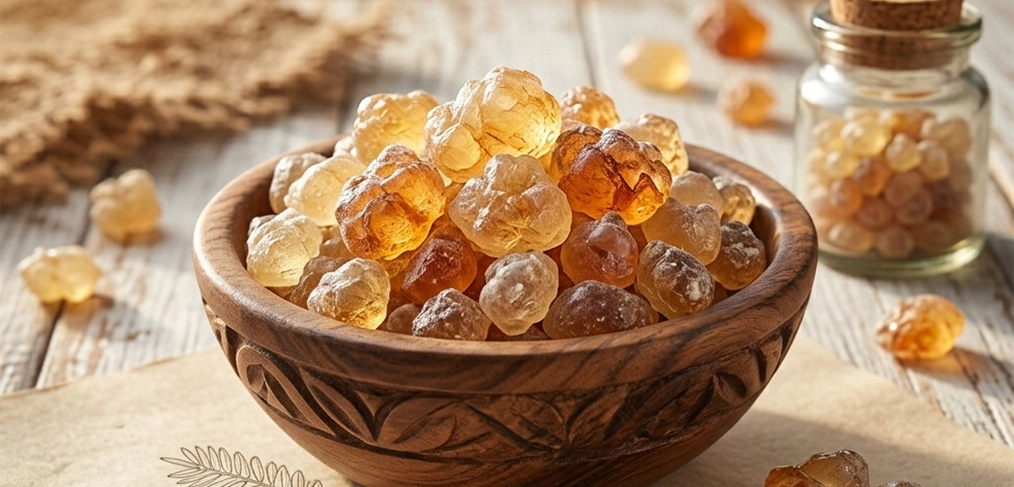
Gum Arabic is a natural plant-based ingredient with applications across the food, beverage, pharmaceutical, cosmetic, and industrial sectors. Also known as Acacia Gum, it is a water-soluble gum obtained from certain species of Acacia trees and is valued for its functional properties, versatility, and natural origin.
Africa is an important source of Gum Arabic, with several countries producing and supplying the commodity to international markets. For manufacturers, distributors, food processors, and other commercial buyers, sourcing bulk Gum Arabic from reliable suppliers can provide access to a versatile natural ingredient for a wide range of applications.
In this guide, we explore what Gum Arabic is, where it comes from, its common uses, quality considerations, and what buyers should know when sourcing it for international trade.
What Is Gum Arabic?
Gum Arabic is a natural exudate obtained from the stems and branches of certain Acacia trees. After harvesting, the gum is collected, cleaned, sorted, and processed according to the required specification.
It is typically available in forms such as:
- Raw Gum Arabic
- Cleaned Gum Arabic
- Gum Arabic granules
- Gum Arabic powder
- Processed or spray-dried Gum Arabic
The exact form supplied depends on the intended application and the requirements of the buyer.
One of the most important characteristics of Gum Arabic is its ability to dissolve or disperse in water and function as a stabilizer, emulsifier, thickener, and film-forming agent in various formulations.
Where Does Gum Arabic Come From?
Gum Arabic is primarily associated with the African Sahel, where Acacia trees grow naturally in semi-arid environments.
Countries across the region have established Gum Arabic production and supply chains, making Africa an important source for international buyers.
Nigeria also has suitable regions for Acacia production and participates in the broader African agricultural commodity market. However, buyers should always verify the specific origin, grade, processing method, and available quantity with their supplier before placing an order.
What Is Gum Arabic Used For?
The versatility of Gum Arabic is one of the main reasons it is valued by manufacturers around the world.
1. Food and Beverage Industry
Gum Arabic is widely used in food and beverage formulations because of its functional properties.
It can be used as a:
- Stabilizer
- Emulsifier
- Encapsulating agent
- Texture modifier
- Film-forming agent
It is particularly useful in formulations where manufacturers need to stabilize ingredients or improve the consistency and performance of a finished product.
2. Soft Drinks and Flavoured Beverages
Gum Arabic can be used in beverage formulations to help stabilize flavour oils and other ingredients.
Its emulsifying properties make it particularly useful in products where oil-based flavour components need to remain evenly distributed within a water-based beverage.
3. Confectionery
Gum Arabic is used in the confectionery industry in products such as chewing gum, candies, pastilles, and other formulations.
It can contribute to texture, stability, and controlled release of flavours.
4. Pharmaceutical Applications
Gum Arabic has applications in pharmaceutical formulations because of its functional and natural properties.
Depending on the formulation, it can be used as a binder, stabilizer, suspending agent, or encapsulating material.
Pharmaceutical applications require appropriate grades and specifications, so manufacturers should source material that meets their relevant regulatory and quality requirements.
5. Cosmetics and Personal Care
Gum Arabic can also be found in cosmetic and personal-care formulations.
Its film-forming and stabilizing properties make it useful in products such as creams, lotions, masks, and other formulations.
The appropriate grade should be selected according to the intended cosmetic application and applicable standards.
6. Printing and Industrial Applications
Beyond food and consumer products, Gum Arabic has applications in several industrial processes.
It has historically been used in printing, particularly in lithography, where its surface-active and film-forming properties can be useful.
This versatility makes Gum Arabic an interesting natural raw material for manufacturers across multiple industries.
Why Is Gum Arabic Important to Global Industries?
Manufacturers are increasingly interested in natural and multifunctional ingredients that can perform several roles within a formulation.
Gum Arabic offers several characteristics that make it commercially valuable:
Natural origin: It is derived from Acacia trees.
Water solubility: Many Gum Arabic grades can dissolve readily in water.
Functional versatility: It can perform roles including stabilization, emulsification, encapsulation, and film formation.
Wide industrial application: It can be used across food, beverages, pharmaceuticals, cosmetics, and other industries.
Global demand: Its functional properties make it a valuable ingredient in international manufacturing and processing industries.
Types and Grades of Gum Arabic
Not all Gum Arabic is identical. Different grades and specifications can be produced depending on the Acacia species, origin, harvesting method, processing, and intended application.
Commercial buyers may encounter different classifications based on:
- Botanical source
- Origin
- Purity
- Colour
- Solubility
- Moisture content
- Particle size
- Microbiological specifications
- Processing method
- Intended application
For this reason, buyers should not purchase Gum Arabic based solely on its name. A detailed product specification should be agreed upon before an order is finalized.
Raw Gum Arabic vs Gum Arabic Powder
One of the important purchasing decisions is whether to buy Gum Arabic in raw, granular, or powdered form.
Raw or Natural Gum Arabic
Raw Gum Arabic generally consists of naturally collected gum that has undergone varying levels of cleaning and sorting.
It may be suitable for processors who have their own facilities for further cleaning, processing, grinding, or purification.
Gum Arabic Powder
Powdered Gum Arabic has undergone additional processing and is generally easier to incorporate into industrial formulations.
The appropriate form depends on the buyer’s manufacturing process and application.
How Is Gum Arabic Harvested?
Gum Arabic is obtained from Acacia trees through a process known as tapping.
During harvesting, controlled cuts may be made on the tree to encourage the natural exudation of gum. The gum subsequently hardens into pieces or tears that can be collected.
The collected material is then subjected to post-harvest processes such as:
- Collection
- Drying
- Sorting
- Cleaning
- Grading
- Packaging
- Quality inspection
Responsible harvesting practices are important because the long-term productivity of Acacia trees and the communities that depend on them are closely connected to the sustainability of the supply chain.
How to Choose a Reliable Gum Arabic Supplier
When purchasing Gum Arabic for commercial use, choosing the right supplier is essential.
1. Verify Product Specifications
Request a detailed specification sheet before placing a bulk order.
Depending on the intended application, this may include information about purity, moisture, colour, solubility, microbiological parameters, particle size, and other relevant characteristics.
2. Confirm the Origin
Knowing the country and region of origin can help buyers assess the supply chain and ensure that the product meets their sourcing requirements.
3. Ask About Quality Control
A professional supplier should have processes for sorting, cleaning, grading, packaging, and inspecting the commodity before shipment.
4. Consider Packaging
Gum Arabic packaging should protect the product from moisture, contamination, and damage during storage and transportation.
Packaging requirements can vary depending on whether the product is supplied as raw gum, granules, or powder.
5. Discuss Export Documentation
International buyers should confirm the documentation required for their destination country and intended application.
Depending on the transaction, this may include commercial documents, certificates, inspection documents, and other export-related paperwork.
6. Clarify Shipping Terms
Before confirming an order, both parties should agree on the applicable Incoterm, port of loading, destination, delivery timeline, and responsibility for freight and insurance.
Buying Gum Arabic in Bulk
Businesses that use Gum Arabic as a manufacturing ingredient may prefer to purchase in bulk to maintain production continuity and streamline their procurement process.
Bulk buyers should provide the supplier with information such as:
- Required quantity
- Desired Gum Arabic grade
- Raw, granular, or powdered form
- Intended application
- Packaging requirements
- Destination country
- Required certifications or documentation
- Preferred shipping terms
- Delivery schedule
Clear specifications help suppliers provide more accurate quotations and reduce the risk of receiving material that does not meet the buyer’s requirements.
Gum Arabic Export from Nigeria
Nigeria has a large and diverse agricultural sector and is strategically positioned to participate in the international trade of agricultural commodities.
For buyers interested in Gum Arabic from Nigeria, working with an experienced agricultural exporter can simplify the sourcing process by coordinating procurement, quality control, packaging, documentation, and logistics.
However, availability and specifications can vary by season and supply source. International buyers should therefore confirm current availability and product specifications before making purchasing decisions.
Industries That Buy Gum Arabic
Because of its multifunctional properties, Gum Arabic can be relevant to buyers across several industries.
These include:
- Food manufacturers
- Beverage companies
- Confectionery manufacturers
- Pharmaceutical companies
- Cosmetic manufacturers
- Nutraceutical manufacturers
- Spice and ingredient distributors
- Industrial manufacturers
- Ingredient wholesalers
- Importers and commodity traders
For each application, the required grade and quality parameters may be different.
What Should You Ask a Gum Arabic Supplier?
Before purchasing, commercial buyers should ask important questions such as:
What is the botanical source?
Knowing the source of the Gum Arabic can help determine whether it is appropriate for the intended application.
What grade is available?
Different applications may require different grades and processing levels.
What is the moisture content?
Moisture is an important consideration for storage stability and product quality.
Is the product cleaned and sorted?
Buyers should understand how much post-harvest processing has been completed.
What packaging is available?
Packaging should match the buyer’s storage, transportation, and manufacturing requirements.
What quantity can you supply?
For large manufacturers and distributors, consistent supply capacity is an important consideration.
What shipping terms are available?
Confirm whether the supplier can offer terms such as FOB, CIF, or other agreed Incoterms.
How Should Gum Arabic Be Stored?
Gum Arabic should be stored in a clean, dry environment protected from excessive moisture, contamination, and other conditions that could negatively affect its quality.
Proper packaging and warehouse conditions are particularly important during long-distance transportation and extended storage.
Buyers should follow the storage recommendations provided for the specific Gum Arabic grade they purchase.
Why Source African Gum Arabic?
Africa’s Sahel region provides a natural environment for Acacia trees and has a long history of Gum Arabic production.
Sourcing from African suppliers can give international buyers access to products at origin while creating opportunities to develop direct agricultural supply relationships.
For businesses purchasing large quantities, working directly with an experienced exporter can also provide greater visibility into sourcing, quality control, packaging, and logistics.
Frequently Asked Questions About Gum Arabic
Is Gum Arabic the same as Acacia Gum?
The terms are commonly used interchangeably in commercial contexts. Gum Arabic refers to natural gum obtained from certain Acacia species, although the specific botanical source and applicable standards should always be confirmed with the supplier.
What is Gum Arabic used for?
Gum Arabic is used in food, beverages, confectionery, pharmaceuticals, cosmetics, printing, and other industrial applications. Its functional properties include emulsification, stabilization, encapsulation, and film formation.
Can Gum Arabic be purchased in bulk?
Yes. Gum Arabic is commercially available in bulk quantities for manufacturers, wholesalers, distributors, and other industrial buyers.
Does Nigeria supply Gum Arabic?
Nigeria has Acacia-producing regions and participates in the agricultural commodity supply chain. Buyers should confirm current availability, origin, grade, and quantity with an established Nigerian supplier.
Is Gum Arabic a natural product?
Yes. Gum Arabic is a naturally occurring plant exudate collected from certain Acacia trees and subsequently cleaned, sorted, and processed for commercial applications.
What industries use Gum Arabic?
The food and beverage, pharmaceutical, confectionery, cosmetic, printing, and industrial sectors all have applications for Gum Arabic.
Source Gum Arabic from Nigeria
At Tinker & Bell Trading Ltd, we connect international buyers with agricultural commodities sourced from Nigeria and other African supply chains.
We supply agricultural products to businesses looking for reliable sourcing, competitive commercial arrangements, and export-ready commodities.
If you are looking to purchase bulk Gum Arabic, our team can discuss your required quantity, specifications, packaging requirements, destination, and shipping terms.
Request a quotation or product specifications today.
Email: sales@tinkerandbell.com
General enquiries: info@tinkerandbell.com
Website: www.tinkerandbell.com
Conclusion
Gum Arabic is a versatile natural ingredient with applications spanning food and beverages, confectionery, pharmaceuticals, cosmetics, printing, and other industries.
Its water-soluble nature, stabilizing properties, emulsification capabilities, and natural origin have made it an important raw material for manufacturers worldwide.
For businesses looking to source bulk Gum Arabic, product specifications, quality control, origin, packaging, documentation, and reliable supply should all be considered before placing an order.
With Africa playing an important role in global Gum Arabic production, sourcing directly through established suppliers can provide international buyers with access to this valuable natural commodity while strengthening agricultural trade between Africa and global markets.
