

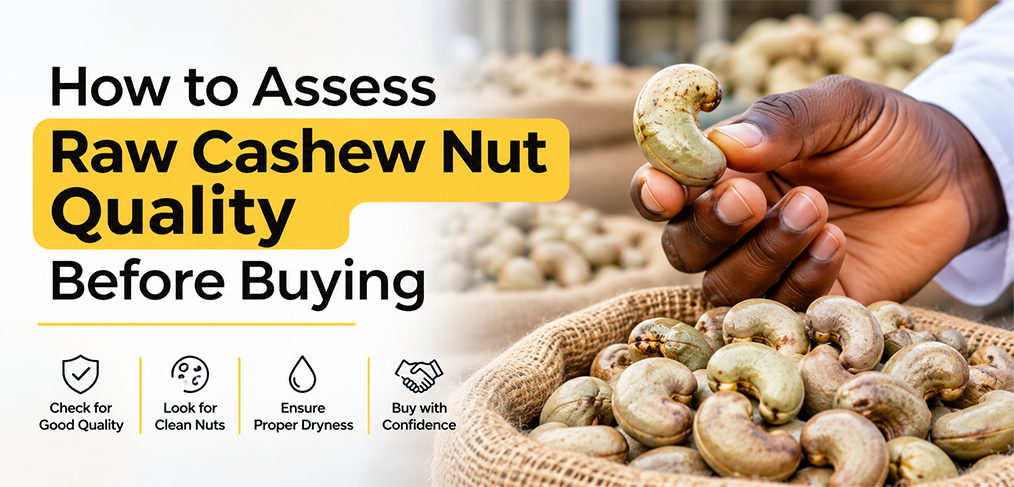
Raw cashew nut quality affects usable processing yield and profitability. A low purchase price offers little value if too many nuts are empty, damaged or unsuitable for processing. Bulk buyers should evaluate representative samples against a detailed written specification before agreeing on supply.
Understand the product being offered
The term raw cashew nuts refers to nuts still in their shells. These differ from shelled cashew kernels sold for food manufacturing or consumption. Confirm which product the quotation covers before comparing.
Measure raw cashew nut quality
Nut count indicates how many nuts make up a kilogram. It helps describe average size, but size alone does not establish quality. Buyers should also examine kernel recovery and defects.
Kernel outturn estimates the usable kernel recovered from a given quantity of raw nuts. Agree on the sampling method, calculation and units with your supplier. Do not compare figures produced using different testing conventions.
Inspect moisture and defects
Check moisture using an appropriate method and an agreed acceptance limit. Look for mould, insect damage, immature nuts and foreign matter. Cutting tests can help reveal internal defects that are not visible through the shell.
Take samples from different parts of the lot. A carefully selected handful cannot represent an entire container. Record the batch reference, sampling date and test results so everyone evaluates the same material.
Protect quality after purchase
Confirm packaging, storage conditions and loading arrangements. Keep the agreed specification attached to the purchase contract and establish how shortages or quality differences will be assessed.
For market context, NEPC provides a cashew product profile. Your purchase decision should still depend on the actual batch offered.
Discuss bulk cashew sourcing with Tinker & Bell Trading Ltd through our bulk orders page or sales@tinkerandbell.com. Include your quantity, required quality parameters and destination port when requesting a quotation.
