

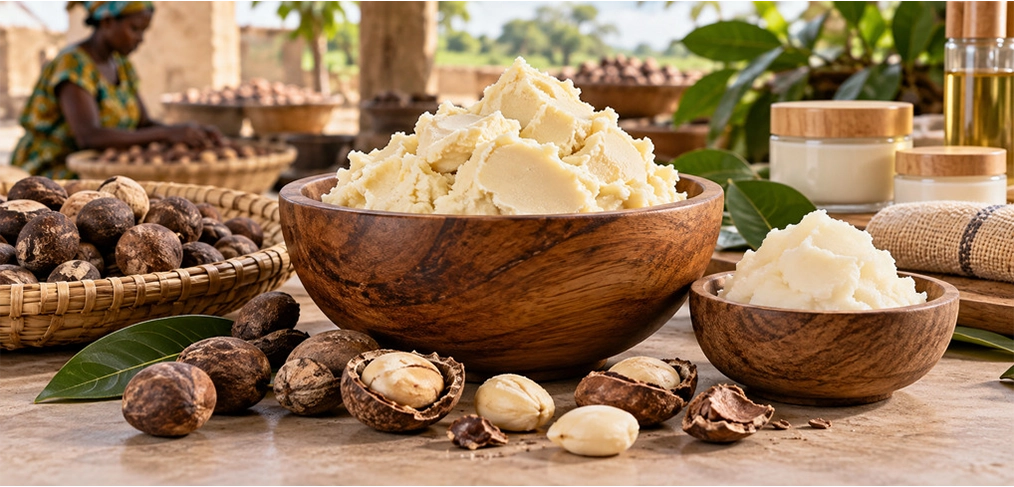
What is shea butter?
Shea butter is a vegetable fat obtained from the kernels of the shea tree, Vitellaria paradoxa. It is widely associated with West African production and is valued for its texture, fatty-acid composition and unsaponifiable components.
It is sold in unrefined, refined and application-specific forms. The right grade depends on whether the buyer is making cosmetics, soap, personal-care products or permitted food products.
Skincare manufacturers
Cosmetic formulators use shea butter in body butters, creams, lotions, balms and lip-care products. It provides emollience, contributes to texture and helps reduce moisture loss from the skin surface.
Formulators must test colour, odour, melting behaviour, compatibility and stability within the finished formula. Raw material marketing should not promise to cure eczema or other medical conditions.
Haircare manufacturers
Shea butter appears in conditioners, masks, styling products, scalp products and textured-hair formulations. It can add richness, lubrication and softness to an oil-based or emulsified product.
The required consistency and odour profile depend on the brand. Refined material may be preferred when a neutral colour and scent are important.
Soap and cleansing products
Soap makers use shea butter as part of the oil phase in bar soaps and specialist cleansers. Its fatty-acid profile influences hardness, conditioning feel and formulation behaviour.
The buyer should specify whether the material is intended for cold-process soap, hot-process soap or industrial production and should run pilot batches before scaling.
Food and confectionery applications
Suitable food-grade shea fractions may be used in permitted confectionery and fat systems, subject to destination regulations and customer specifications. Cosmetic-grade shea butter should never be assumed to be food grade.
Food buyers need appropriate hygiene, contaminant testing, traceability, processing controls and regulatory documentation.
Unrefined and refined shea butter
Unrefined shea butter retains more of its natural colour and characteristic aroma because it undergoes less intensive processing. Refined shea butter is processed to reduce colour, odour and impurities, which can make it easier to use in lightly scented or pale formulations.
Neither description alone guarantees quality. The buyer must define the required specification, production controls and test limits.
Important quality indicators
Common checks include colour, odour, texture, moisture, insoluble impurities, free fatty acids or acid value, peroxide value, melting behaviour and microbiological or contaminant parameters where applicable.
Oxidised butter may develop an unpleasant rancid odour. Water, dirty equipment, unsuitable packaging and prolonged heat exposure can also reduce quality.
Traceability and responsible sourcing
Ask the supplier to identify the production lot, processing location, raw-kernel source and handling history. Consistent records help separate approved lots and investigate quality deviations.
Commercial buyers may also set environmental, labour, community-impact or certification requirements. These should be verified through the appropriate documentation and audit process.
Packaging and storage
Shea butter should be packed in clean, compatible, well-sealed containers or lined cartons according to the buyer’s specification. Protect it from heat, direct sunlight, water, dirt and strong odours.
Storage conditions influence texture and oxidation. Containers should carry clear batch identification, net weight, production details and other required information.
Buy Nigerian shea butter in bulk
Tinker and Bell Trading works with international commercial buyers sourcing Nigerian shea butter. Cosmetic manufacturers, soap makers, distributors and ingredient companies can submit their required grade, specification, packaging, destination and order volume.
Visit www.tinkerandbell.com/bulk-orders/ or email sales@tinkerandbell.com to discuss current availability.
Frequently asked questions
What is shea butter used for?
It is used in skincare, haircare, soap, personal-care formulations and selected regulated food applications.
What is the difference between refined and unrefined shea butter?
Unrefined shea retains more natural colour and aroma; refining produces a more neutral material. Required quality still depends on a written specification.
How should shea butter be stored?
Keep it well sealed in a cool, dry, clean area away from direct sunlight, water, strong odours and excessive heat.
