

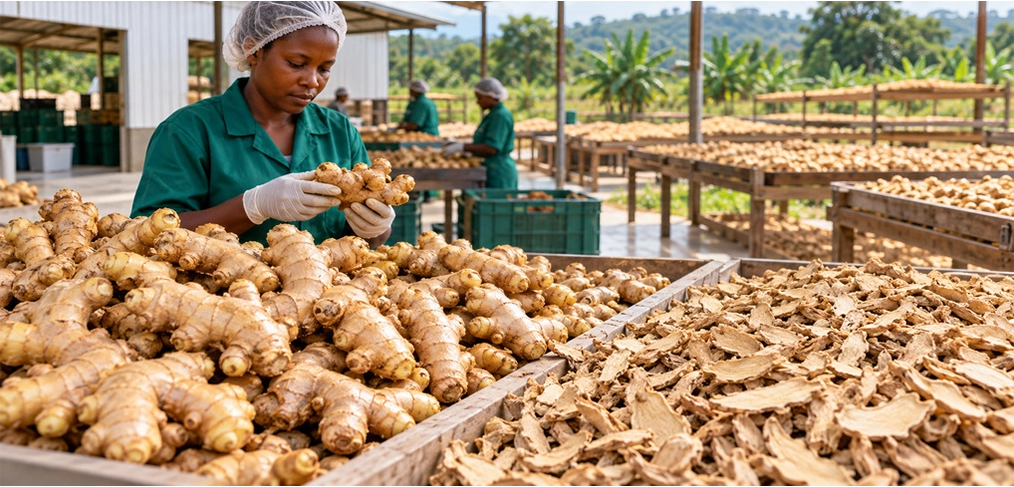
What are ginger roots?
Ginger, botanically known as Zingiber officinale, is a rhizome widely used for its pungent aroma and warm, spicy flavour. It is traded fresh, dried whole or split, sliced, milled into powder, extracted or processed into oil and oleoresin.
The phrase “ginger root” is widely used in trade, although the commercial part is technically a rhizome.
Who uses ginger roots?
Spice processors mill dried ginger into powder for retail and industrial blends. Beverage companies use it in teas, soft drinks, concentrates and flavour systems. Bakeries and confectionery manufacturers use ginger in biscuits, cakes, sweets and seasonal products.
Sauce, seasoning and ready-meal producers value ginger for savoury flavour development. Extractors and ingredient manufacturers process it into essential oil, oleoresin and concentrated flavour ingredients.
Fresh ginger and dried ginger serve different needs
Fresh ginger has high moisture and a crisp, juicy character. It needs a temperature- and time-sensitive supply chain. Dried ginger is more concentrated, more stable and better suited to milling, extraction and long-distance dry-cargo trade.
Buyers should specify whole, split, sliced or powdered form, as well as whether the skin should be retained or removed.
What good-quality dried ginger looks like
Good dried ginger should have the colour, aroma, pungency and cleanliness expected for the grade. It should be properly dried and free from visible mould, infestation, excessive dirt, stones, plastic and other foreign matter.
The pieces should not have musty, smoky, chemical or rancid odours. Appearance alone cannot confirm chemical composition or microbiological safety.
Moisture is a critical quality factor
Excess moisture increases the risk of mould, clumping and deterioration during storage and sea transit. Uneven drying can leave wet pockets inside apparently dry pieces.
Moisture limits and test methods should be agreed in the contract. Finished ginger must be stored off the floor in a dry, pest-controlled area and protected from rain during loading.
Laboratory tests buyers may request
Depending on the intended use and destination, buyers may request moisture, total ash, acid-insoluble ash, volatile oil, pesticide residues, heavy metals, mycotoxins and microbiological testing. Identity and adulteration testing may also be relevant for powder.
The certificate of analysis should identify the actual lot and use methods acceptable to both parties. Keep sealed retention samples.
Food safety and health claims
Ginger has a long history of culinary and traditional use. Research has examined ginger preparations for nausea and other conditions, but evidence varies by product and dose. Bulk suppliers should avoid making treatment claims and should focus on verified product quality.
Food manufacturers remain responsible for formulation, labelling and compliance in the destination market.
Packaging and container preparation
Use clean, dry, strong packaging suited to the buyer’s handling system. Liners may be needed where moisture protection is specified. Labels should identify the product, origin, lot, net weight and other required information.
Before loading, inspect the container for leaks, condensation risk, odours, pests, residue and structural damage.
Questions to ask a ginger supplier
Ask about origin, crop period, drying method, storage time, lot size, traceability, test results, packaging and shipment readiness. Confirm whether the sample is representative of the available quantity.
A dependable supplier should discuss specifications and risks clearly instead of relying only on photographs or broad quality claims.
Source dried Nigerian ginger roots
Tinker and Bell Trading supplies dried Nigerian ginger roots to international commercial buyers. Share your required form, quality parameters, testing, packaging, destination and order volume.
Visit www.tinkerandbell.com/bulk-orders/ or email sales@tinkerandbell.com to start a sourcing discussion.
Frequently asked questions
What are dried ginger roots used for?
They are used in spice powders, teas, drinks, bakery products, confectionery, sauces, extracts, essential oils and oleoresins.
How can buyers assess ginger quality?
Use a written specification, representative sampling, physical inspection, laboratory testing and supplier traceability.
Why is moisture important in dried ginger?
Excess or uneven moisture can encourage mould and deterioration during storage and transport.
