

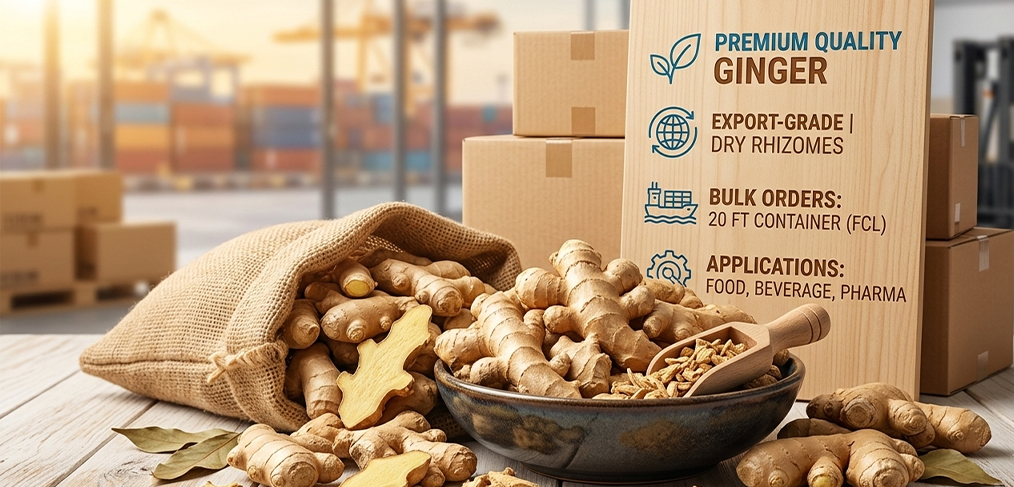
Dry ginger is one of the world’s most widely traded spices and an important agricultural commodity used in food, beverages, herbal products, and food processing. Produced by cleaning, drying, and preserving mature ginger rhizomes, dry ginger offers a longer shelf life and makes ginger easier to store, transport, process, and use throughout the year.
Nigeria is an important producer of ginger, with suitable agricultural conditions for cultivating high-quality ginger. This has created opportunities for international buyers looking to source bulk dry ginger from Nigeria for commercial and industrial applications.
In this guide, we explore what dry ginger is, how it is produced, its common uses, different forms, quality considerations, and what international buyers should know when sourcing dry ginger in bulk.
What Is Dry Ginger?
Dry ginger is produced from fresh ginger rhizomes that have been harvested, cleaned, prepared, and dried to significantly reduce their moisture content.
The drying process helps preserve the ginger and makes it suitable for longer-term storage and transportation.
Dry ginger may be supplied in several forms, including:
- Whole dried ginger
- Split dried ginger
- Sliced dried ginger
- Dried ginger pieces
- Ginger powder
- Ground ginger
The form required generally depends on the buyer’s intended application.
For example, food manufacturers may require ginger powder for seasoning and formulation, while spice wholesalers may prefer whole or sliced dried ginger for further processing.
Where Does Dry Ginger Come From?
Ginger is cultivated in many tropical and subtropical regions around the world. Major producing countries include India, Nigeria, China, Indonesia, and other agricultural regions.
Nigeria has developed a strong reputation as a source of ginger, particularly from northern and central parts of the country where climatic and soil conditions support ginger cultivation.
Nigerian ginger is used domestically and can also enter international agricultural supply chains through exporters and commodity traders.
How Is Dry Ginger Produced?
Producing high-quality dry ginger requires careful handling from harvesting through packaging.
1. Harvesting
Mature ginger rhizomes are harvested when the crop has reached the appropriate stage of maturity.
The timing of harvest can influence the characteristics and quality of the finished dried product.
2. Cleaning
Freshly harvested ginger is cleaned to remove soil and other unwanted materials.
Proper cleaning is important because ginger grows underground and can carry soil particles after harvesting.
3. Preparation
Depending on the desired product, the ginger may be peeled, split, sliced, or prepared in another suitable form before drying.
4. Drying
The prepared ginger is dried under controlled conditions to reduce moisture.
Drying is one of the most important stages because inadequate drying can negatively affect storage stability and product quality.
5. Sorting and Grading
Once dried, the ginger is sorted to remove unsuitable pieces and foreign materials.
The product can then be graded according to the agreed commercial specifications.
6. Packaging
The finished dry ginger is packed in suitable packaging to protect it during storage, transportation, and international shipment.
Types of Dry Ginger
Different forms of dry ginger are available for commercial buyers.
Whole Dry Ginger
Whole dried ginger consists of complete or substantially intact dried rhizomes.
It is commonly used by spice traders and processors that intend to further process the ginger.
Split Dry Ginger
Ginger rhizomes can be split into smaller pieces before or during the drying process.
Splitting can help facilitate drying and subsequent processing.
Sliced Dry Ginger
Dried ginger slices can be used directly in certain food and beverage applications or processed further.
Dry Ginger Powder
Ginger can be milled into powder for use in seasoning, food manufacturing, beverages, bakery products, and other applications.
Powdered ginger is particularly convenient for manufacturers because it can be incorporated directly into formulations.
Dry Ginger Uses
Dry ginger has applications across a wide range of industries.
1. Food and Cooking
Dry ginger is commonly used as a spice in cooking.
It can add a warm, pungent, and distinctive flavour to:
- Soups
- Stews
- Sauces
- Rice dishes
- Meat dishes
- Vegetable dishes
- Marinades
- Spice blends
Dried ginger can be used whole, sliced, crushed, or ground depending on the application.
2. Ginger Powder and Seasonings
Ground dry ginger is widely used in seasoning products and spice blends.
Food manufacturers can combine ginger powder with other spices to create curry blends, marinades, seasoning mixes, and other products.
3. Beverages
Ginger is widely used in beverage production.
Dry ginger can be processed into ginger powder or extracted for use in:
- Ginger drinks
- Herbal beverages
- Tea products
- Flavoured beverages
- Concentrates
- Beverage mixes
4. Bakery and Confectionery
Ginger powder can be incorporated into baked goods and confectionery products to provide its characteristic warm flavour.
It may be used in biscuits, cakes, cookies, pastries, sweets, and other products.
5. Food Processing
Commercial food processors use dried ginger as an ingredient in a variety of manufactured products.
Its dried form provides convenience because it can be stored for longer periods and transported more easily than fresh ginger.
6. Spice Manufacturing
Spice manufacturers can purchase dry ginger in bulk and process it into different commercial products, including ginger powder and blended seasonings.
Why Is Dry Ginger Popular in Global Markets?
Several characteristics make dry ginger attractive to commercial buyers.
Longer Storage Potential
Removing moisture helps make ginger more suitable for storage compared with fresh ginger, provided it is properly dried and stored.
Versatility
Dry ginger can be supplied in whole, sliced, split, or powdered forms, allowing it to serve different industries.
Easy Transportation
The reduced moisture content and stable dried form make dry ginger convenient for transportation and international trade.
Wide Range of Applications
From food processing and beverages to spice manufacturing and bakery products, ginger is used across many industries.
Year-Round Availability
Drying allows ginger to be stored and supplied beyond the immediate fresh harvest period, subject to proper storage and supply conditions.
Nigerian Dry Ginger
Nigeria has a significant agricultural sector and produces ginger for domestic consumption and commercial trade.
Nigerian ginger is cultivated by farmers across suitable growing regions, with production contributing to the country’s agricultural economy.
For international buyers, Nigerian dry ginger can provide an opportunity to source ginger at origin for processing, distribution, and manufacturing.
However, quality can vary between farms, seasons, processing methods, and suppliers. Buyers should therefore request product specifications and quality documentation before confirming a bulk order.
Quality Characteristics of Dry Ginger
When purchasing dry ginger commercially, buyers should pay close attention to quality.
Important parameters may include:
- Moisture content
- Appearance
- Colour
- Aroma
- Cleanliness
- Foreign matter
- Mould
- Insect damage
- Particle size
- Ginger fibre characteristics
- Microbiological parameters
- Residue requirements
- Packaging condition
The specific requirements will depend on the intended application and destination market.
A food manufacturer may have different requirements from a spice wholesaler or industrial processor.
How to Choose a Dry Ginger Supplier
Finding a reliable supplier is one of the most important steps when purchasing dry ginger in bulk.
1. Ask for Product Specifications
A supplier should be able to provide relevant product information covering quality parameters and available forms.
2. Confirm the Product Form
Clearly state whether you require:
- Whole dry ginger
- Split dry ginger
- Sliced dry ginger
- Ginger pieces
- Ginger powder
This prevents misunderstandings during procurement.
3. Check Supply Capacity
For commercial buyers, consistency is important. Ask the supplier about available quantities and their ability to support repeat orders.
4. Review Packaging
The packaging should be appropriate for the product, storage conditions, handling, and transportation requirements.
5. Confirm Origin
If Nigerian origin is important to your procurement strategy, confirm the country and relevant sourcing region.
6. Discuss Quality Documentation
Depending on the market and application, buyers may require certificates, laboratory analysis, inspection documents, or other supporting documentation.
7. Agree on Shipping Terms
International buyers should clearly establish the agreed Incoterm, port of loading, destination, shipping method, and delivery timeline.
Buying Dry Ginger in Bulk
Businesses that use significant quantities of ginger often purchase it in bulk to improve procurement efficiency and maintain a consistent supply.
Potential bulk buyers include:
- Spice wholesalers
- Food manufacturers
- Beverage companies
- Restaurants
- Food processors
- Ingredient distributors
- Retail spice brands
- Importers
- Commodity traders
Before requesting a quotation, buyers should provide their required quantity, product form, specifications, packaging requirements, destination, and preferred shipping terms.
This allows suppliers to prepare a more accurate commercial offer.
Dry Ginger Export from Nigeria
Nigeria’s agricultural production provides opportunities for international buyers seeking African agricultural commodities.
For buyers interested in dry ginger export from Nigeria, an experienced exporter can coordinate several stages of the supply chain, including sourcing, sorting, quality control, packaging, documentation, and shipment.
Export requirements can differ according to the destination country and intended use of the product. Buyers should therefore confirm all applicable import requirements before finalizing an order.
Packaging Dry Ginger for Export
Proper packaging is essential for protecting dry ginger during storage and transportation.
Depending on the product and buyer’s requirements, dry ginger may be packed in suitable food-grade or export-appropriate bags.
Packaging should help protect the product from:
- Moisture
- Contamination
- Excessive humidity
- Physical damage
- Pests
- Unfavourable storage conditions
For containerized exports, buyers and suppliers should agree on packaging specifications before shipment.
How Should Dry Ginger Be Stored?
Dry ginger should be stored in a clean, dry, well-ventilated environment away from excessive moisture and contamination.
Good storage practices help maintain the quality of the product throughout its intended storage period.
The exact storage conditions should also follow the recommendations for the specific dry ginger product and packaging used.
Dry Ginger vs Fresh Ginger
The main difference between fresh and dry ginger is the amount of moisture present and how the products are used.
Fresh ginger contains significantly more moisture and is commonly used directly in cooking, beverages, and fresh-food applications.
Dry ginger has been processed to remove much of its moisture, making it more suitable for longer storage, transportation, grinding, and commercial processing.
Dry ginger also offers convenience for manufacturers who require a stable spice ingredient that can be stored and used as needed.
Frequently Asked Questions About Dry Ginger
What is dry ginger?
Dry ginger is ginger rhizome that has been harvested, cleaned, prepared, and dried to reduce its moisture content and improve its storage and processing characteristics.
What is dry ginger used for?
Dry ginger is used in cooking, spice blends, beverages, bakery products, confectionery, food processing, and the production of ginger powder.
Can I buy dry ginger in bulk?
Yes. Dry ginger is commonly traded in bulk for wholesalers, food manufacturers, processors, restaurants, spice companies, and international importers.
Is Nigerian dry ginger available for export?
Nigerian ginger enters international agricultural supply chains, and dry ginger can be sourced from Nigerian suppliers and exporters depending on current availability, specifications, and export requirements.
What forms of dry ginger are available?
Commercial forms can include whole dry ginger, split ginger, sliced ginger, dried ginger pieces, and ginger powder.
How should dry ginger be stored?
Dry ginger should generally be kept in a clean, dry environment protected from moisture, contamination, pests, and excessive humidity.
What should I check before buying dry ginger?
Buyers should consider the product form, moisture content, cleanliness, appearance, foreign matter, packaging, quantity, origin, documentation, and other specifications relevant to their intended application.
Source Dry Ginger from Nigeria
At Tinker & Bell Trading Ltd, we connect international buyers with agricultural commodities sourced from Nigeria.
We work with businesses looking to source agricultural products for wholesale, food processing, manufacturing, distribution, and other commercial applications.
If you are looking for a reliable source of bulk dry ginger from Nigeria, our team can discuss your requirements, including quantity, product specifications, packaging, destination, and shipping terms.
Request product specifications and a quotation today.
Email: sales@tinkerandbell.com
General enquiries: info@tinkerandbell.com
Website: www.tinkerandbell.com
Conclusion
Dry ginger is a versatile agricultural commodity with applications across food, beverage, spice, bakery, confectionery, and food-processing industries.
Its dried form makes ginger easier to store, transport, process, and incorporate into commercial products. For international buyers, sourcing the right quality requires careful attention to product specifications, moisture content, cleanliness, packaging, documentation, and supply consistency.
Nigeria’s agricultural sector provides opportunities for buyers seeking to source dry ginger from Nigeria for wholesale and commercial applications.
Whether you are a spice distributor, food manufacturer, importer, or bulk commodity buyer, working with an experienced supplier can help create a more reliable and transparent sourcing process.
