

Start with the intended use
Turmeric is the rhizome of Curcuma longa. Buyers use fresh or dried turmeric roots for spice production, extraction, beverages, food manufacturing, supplements, cosmetics and traditional preparations. Each application can require a different grade.
Before sourcing, define whether the roots will be sold fresh, sliced and dried, milled into powder or processed for extract. Confirm the required origin, curcumin range, moisture, cleanliness, residue limits, packaging and certification.
Confirm botanical identity and traceability
A reliable supplier should identify the botanical species and connect each lot to a known farming or aggregation area. Records should include supplier, harvest period, quantity, receiving date and processing history.
Traceability helps the buyer investigate a failed test and prevents unknown material from being mixed into an approved lot. It also supports destination-market due diligence.
Check maturity and physical condition
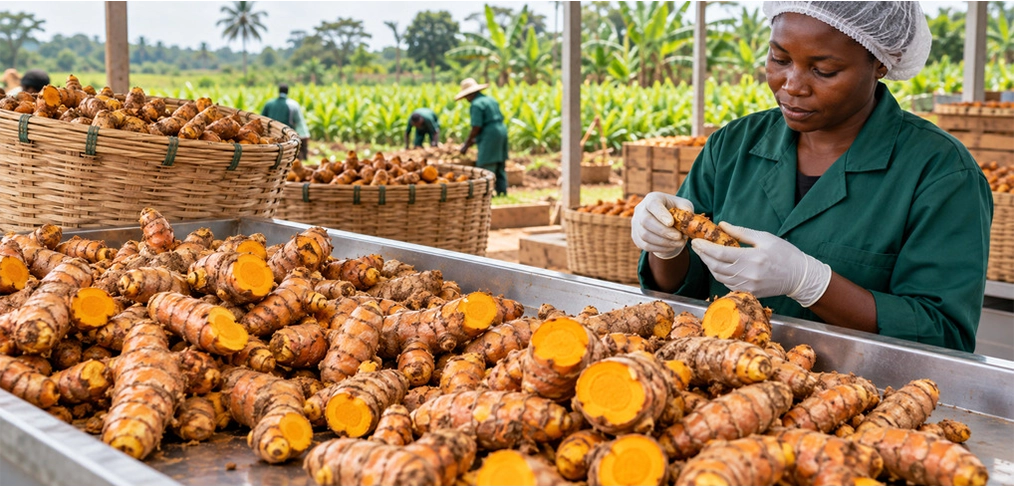
Mature turmeric rhizomes are generally firm, well developed and strongly coloured inside. Reject or segregate roots that are mouldy, badly shrivelled, rotten, insect-damaged or affected by serious mechanical injury.
Size and external appearance vary by variety and growing conditions. Therefore, the buyer should set measurable tolerances rather than relying on broad descriptions such as “premium quality.”
Assess colour and aroma
When cut, good turmeric should show the colour expected for the variety and grade, commonly ranging from yellow to deep orange. It should have a characteristic earthy, warm aroma without musty, fermented, chemical or smoky notes.
Colour alone cannot confirm curcumin content or purity. Laboratory analysis is necessary when a minimum curcuminoid level is commercially important.
Control soil and foreign matter
Turmeric grows underground, so soil, stones and plant debris are important sourcing risks. Roots should be cleaned using a controlled process appropriate to the intended use. Excessive washing without proper drying can create a moisture problem.
The specification should define acceptable foreign matter and whether roots must be washed, unwashed, polished, whole or sliced.
Manage moisture and drying
Fresh turmeric is highly perishable. It should move quickly into the agreed fresh supply chain or processing operation. Dried roots must reach a safe, stable moisture level and remain protected from rain and humid storage.
Poor drying can cause mould, discoloration and uneven milling. Use clean raised dryers, protected solar drying or controlled mechanical systems. Never dry export turmeric directly on bare ground.
Test for safety and composition
A representative sample may be tested for moisture, curcuminoids, total ash, acid-insoluble ash, pesticide residues, heavy metals, microbiological limits and unauthorised colours, depending on the intended use and destination.
Turmeric has attracted international attention because some products have been contaminated or adulterated. A certificate of analysis should relate to the actual lot offered, not a general sample from a previous season.
Audit handling and storage
Inspect the supplier’s receiving, sorting, washing, slicing, drying, milling, pest-control and storage procedures. Finished turmeric should be kept off the floor in a dry, ventilated area away from chemicals and strong-smelling goods.
Packaging should be clean, strong and suitable for the product form and voyage. Batch numbers and net weights must match the commercial documents.
Approve a sample before shipment
Agree how the sample will be drawn, sealed and tested. Keep matching retention samples and consider independent inspection for a new supplier or high-value order.
The contract should state the grade, test methods, tolerances, quantity, packaging, Incoterm, inspection point, required documents and claims process.
Source Nigerian turmeric roots through Tinker and Bell
Tinker and Bell Trading works with international buyers seeking Nigerian turmeric roots and other agricultural commodities in commercial quantities. Send your intended use, specification, packaging, destination and required volume so the sourcing plan can be aligned with your operation.
Visit www.tinkerandbell.com/bulk-orders/ or email sales@tinkerandbell.com to request a discussion.
Frequently asked questions
What indicates good-quality turmeric roots?
Firm mature rhizomes, characteristic internal colour and aroma, low defect levels, controlled moisture and compliance with the agreed laboratory specification.
Can colour prove curcumin content?
No. Colour is only a screening clue. Curcuminoid content must be confirmed through an agreed laboratory method.
Should buyers test every shipment?
Testing frequency depends on risk and the contract, but each commercial lot should be represented by an approved sampling and verification process.
