

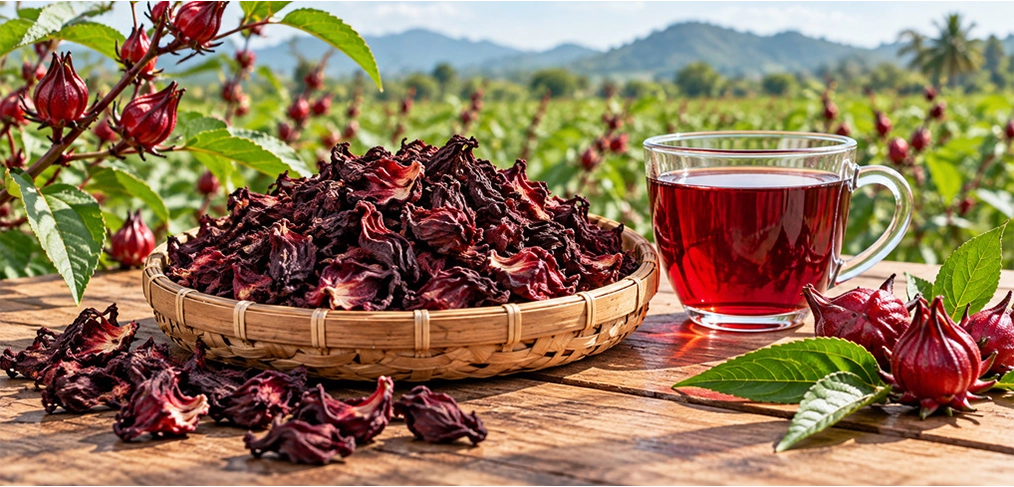
Across international markets, dried hibiscus flowers have become an important botanical ingredient for beverage manufacturers, herbal tea companies, food processors and agricultural commodity distributors.
Recognised for their deep red colour and naturally tart flavour, hibiscus flowers are used in a variety of commercial products, including herbal teas, fruit beverages, botanical blends and food ingredients.
Nigeria is an important sourcing destination for dried hibiscus flowers, with production concentrated in several northern states. For international buyers seeking alternative agricultural supply sources, Nigerian hibiscus presents an opportunity for bulk procurement and supply chain diversification.
At Tinker and Bell Trading, we connect international buyers with Nigerian agricultural products, including dried hibiscus flowers sourced from northern Nigeria.
Why Is Nigerian Hibiscus Attractive to International Buyers?
Nigeria’s northern agricultural regions provide favourable opportunities for hibiscus cultivation and commercial sourcing.
International businesses may consider Nigerian hibiscus for several reasons.
1. Established Agricultural Sourcing Opportunities
Northern Nigeria has established hibiscus-producing communities, creating opportunities for exporters to source dried flowers through farmers, aggregators and agricultural suppliers.
2. Versatile Commercial Applications
Hibiscus flowers are used across several industries. Their colour, flavour and botanical properties make them suitable for different food and beverage applications.
3. Opportunities for Bulk Procurement
International beverage manufacturers, herbal tea companies and ingredient distributors often require substantial quantities of dried hibiscus flowers. Nigerian suppliers can aggregate produce to support commercial procurement requirements.
4. Supply Chain Diversification
Importers looking beyond their existing sourcing destinations can consider Nigeria as an additional supplier. Diversifying agricultural sourcing arrangements can help businesses develop alternative procurement channels.
What Are Dried Hibiscus Flowers Used For?
Hibiscus flowers have several applications in the international food, beverage and botanical ingredient industries.
Some of the major commercial applications include:
1. Herbal Tea Production
Dried hibiscus flowers are widely used in herbal tea production. They produce a naturally deep-red infusion with a distinctive tart flavour.
2. Beverage Manufacturing
Hibiscus is used in the production of ready-to-drink beverages, fruit blends, botanical drinks and other non-alcoholic beverages.
3. Food Processing
Food manufacturers incorporate hibiscus extracts and ingredients into selected food products, flavour formulations and speciality preparations.
4. Botanical Ingredient Blends
Hibiscus flowers are combined with other botanical ingredients to produce herbal tea blends and specialised beverage formulations.
5. Natural Colour Applications
The naturally occurring pigments in hibiscus flowers make them useful in certain food and beverage formulations, subject to the applicable regulatory requirements.
What Should Importers Look for When Buying Hibiscus Flowers?
Product quality is an important consideration when sourcing dried hibiscus in commercial quantities.
Before placing a bulk order, international buyers should evaluate the following:
- Colour: Flowers should have an appropriate colour for the agreed product specification, without excessive discolouration.
- Moisture content: Proper drying is important to minimise mould development and product deterioration.
- Foreign matter: The product should be properly cleaned to minimise sand, stones, stalks and other unwanted materials.
- Odour: Hibiscus should have its characteristic aroma without musty or unusual smells.
- Pesticide residues: Appropriate testing helps
