

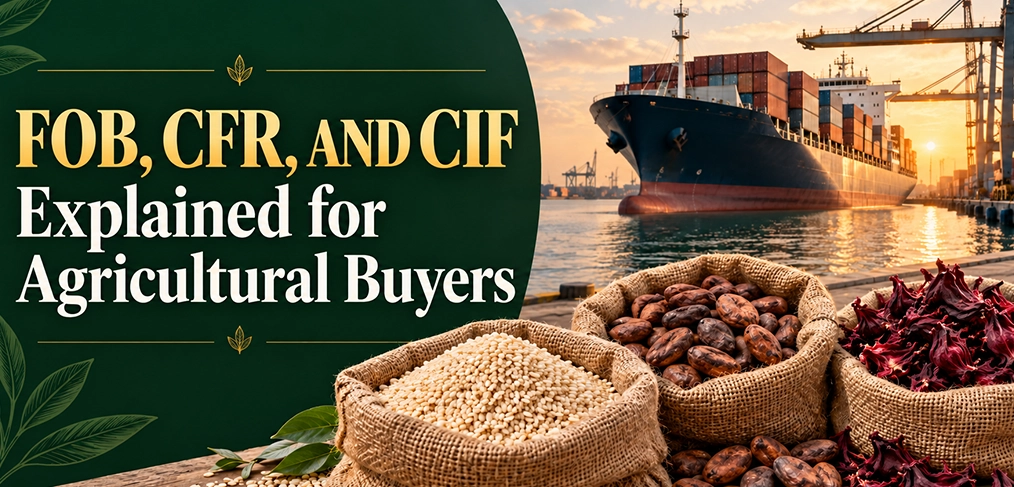
FOB CFR and CIF appear frequently in agricultural export quotations. These Incoterms rules allocate delivery responsibilities, costs and risk between seller and buyer. Understanding them helps you compare offers and identify expenses beyond the product price.
What FOB means
FOB means Free On Board. The seller delivers the goods on board the buyer’s nominated vessel at the named shipment port. Risk then transfers to the buyer, who arranges the main carriage. The seller handles export clearance.
What CFR means
CFR means Cost and Freight. The seller pays for carriage to the named destination port. However, risk transfers when the goods are on board at origin. Paying freight does not mean the seller carries transit risk until arrival.
What CIF means
CIF means Cost, Insurance and Freight. It follows the same risk transfer principle as CFR, while requiring the seller to arrange cargo insurance. Under Incoterms 2020, the default insurance level is limited cover unless the parties agree otherwise.
Compare FOB CFR and CIF carefully
These three rules apply to sea and inland waterway transport. For container shipments handed to a carrier before vessel loading, discuss whether FCA, CPT or CIP better matches the actual delivery arrangement.
Ask for a breakdown of destination charges, import duties and inland transport. Clarify unloading costs and insurance exclusions. None of these terms automatically means delivery to your warehouse.
Always state the named port and rules edition in the contract. Also, agree separately on payment, ownership transfer and remedies for defective goods; Incoterms do not settle every contractual issue.
Check the complete landed cost first.
Request a clear quotation
For agricultural sourcing enquiries, contact Tinker & Bell Trading Ltd through our bulk orders page or sales@tinkerandbell.com. Share your commodity, quantity, destination port and preferred shipping basis so the quotation discussion reflects your actual purchasing needs.
